Just Wayne. Just saying.

Category: Waynes World (Page 1 of 3)

Doomscrolling: The New Smoking?

It’s been on my mind lately that doomscrolling might be the modern equivalent of smoking.

Growing up in the 1960s and ’70s, cigarettes were everywhere. My parents smoked, people smoked on television, and tobacco companies advertised during sport like it was the most normal thing in the world. Lighting up was seen as calming, something to do with your hands, even—strangely—something that looked cool. I never quite understood the appeal, but it was impossible to ignore. It was part of the fabric of everyday life.

I remember when a close friend of mine, at just sixteen, decided to take up smoking. It changed things. He drifted away from our group of non-smoking mates, and looking back now, I sometimes wonder if I should have tried harder to talk him out of it. The truth is, I probably couldn’t have changed his mind. Smoking had a powerful pull back then—social, cultural, even aspirational.

Recently, that same friend passed away from a smoking-related illness. It’s one of those moments that quietly forces you to reflect on how something once so widely accepted can carry such a heavy cost.

Today, smoking is viewed very differently. The risks are well understood, public attitudes have shifted, and regulations have pushed it out of many shared spaces. What was once normal is now, rightly, seen as harmful.

But it makes me wonder—have we simply replaced one habit with another? And this time, it is one that I am finding myself tempted by.

Idle hands, once occupied by cigarettes, are now filled with smartphones. And instead of taking a drag, we scroll. Endlessly.

Doomscrolling—this compulsive habit of consuming negative news and social media—has crept into our lives so subtly that we barely question it. Like smoking once was, it’s everywhere. It fills quiet moments, distracts us when we’re bored, and gives the illusion of staying informed or connected.

But at what cost?

Physically, we’re starting to see the effects. “Tech neck” is becoming common, and younger generations are developing repetitive strain issues in their hands and thumbs from constant scrolling. These may sound minor, but they’re signals of a deeper shift in how we use our bodies.

More concerning, though, is the impact on mental health.

Constant exposure to bad news, comparison, outrage, and conflict chips away at our sense of wellbeing. It can heighten anxiety, distort our view of the world, and quietly erode self-esteem. Just as smokers once believed cigarettes helped them relax, many people now turn to their phones for comfort—only to come away feeling worse.

And like smoking in its heyday, doomscrolling is socially reinforced. Everyone is doing it. It’s normal. Expected, even.

That’s what makes it hard to challenge.

I’m not suggesting that scrolling your phone is the same as smoking a pack of cigarettes a day. But the pattern feels familiar: a widely accepted habit, woven into daily life, offering short-term relief while potentially causing long-term harm.

History has a way of repeating itself—just in different forms.

The difference now is that we’re still early enough to question it.

Maybe the answer isn’t to eliminate technology altogether, just as the solution to smoking wasn’t to eliminate stress or socialising. But awareness matters. Boundaries matter. Choosing when to engage—and when to put the phone down—might be one of the most important small decisions we make each day.

Because if doomscrolling really is the new smoking, it’s worth asking ourselves a simple question:

Do we want to wait decades to fully understand the damage—or start making changes now?

A Simpler Faith for the Road Ahead.

When I first became a Christian, I wanted to understand everything.

I read theology, studied the history of the Church, tried to learn the context of the Bible and the meaning behind the scriptures. I wanted to know what scholars thought, what different traditions believed, and how all the pieces fitted together. Like many new Christians, I assumed that the deeper my faith became, the more complicated it would become.

In some ways, that was true. The more you study, the more you realise that things are rarely as simple as they first appear. The Bible is ancient and layered. The Church has two thousand years of history, much of it inspiring, some of it troubling. Christians disagree about many things.

And eventually you come to a slightly uncomfortable realisation: the more we know, the more we realise how much we don’t know.

But something else has happened to me over the years.

In a strange way, faith has also become simpler.

After years of reading and thinking, I find myself returning to a single idea that sits at the heart of it all: God is love.

If something is done in love, it carries the mark of God.

If it is not done in love, then however religious it may sound, I struggle to see God in it.

(1 John 4:8)

That doesn’t mean love is easy. In fact, it may be the hardest calling of all. Love requires patience, humility, forgiveness, and compassion. It asks us to see other people not as enemies or problems to be solved, but as fellow human beings made in the image of God.

Over the years I have seen Christianity expressed in many different ways. Some of it has been thoughtful and gentle. Some of it has been loud and certain of itself. Some of it has been tied very closely to politics and power.

But the older I get, the more I find myself returning to the question: Where is the love in this?

If love is there—real love, not just words—then I feel confident that God is there too.

If it is absent, then no amount of religious language can quite convince me otherwise.

I am also increasingly aware that it is not my place to decide who is or isn’t a Christian. That judgement belongs to God alone. My task is much simpler, and perhaps much harder: to try, however imperfectly, to live a life shaped by love.

After all the books, all the debates, and all the years of thinking about faith, this is what seems to remain.

Faith is not really about winning arguments or proving that we are right.

It is about learning, slowly and imperfectly, how to love.

Life, Family, and a Symphony: Bec Somehow Does It All.

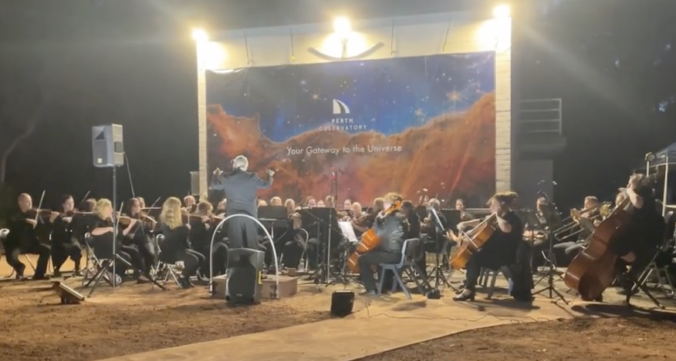
Watching Bec perform with the Hills Symphony Orchestra is breathtaking— though honestly, it’s hard to know where to start! She somehow manages to raise three beautiful children, keep a busy household running, hold down a full-time job, and still find the energy and passion to play at this incredible level. We are beyond proud of her—not just for her talent, but for the amazing person she is every single day. This video is a little window into the magic she brings to the stage.

Holding Onto Humanity in Dark Times

The world feels heavy right now. Headlines tell of children killed, leaders acting with apparent disregard for life, and conflicts that escalate faster than we can comprehend. It’s hard to breathe sometimes, let alone believe that hope is possible.

I won’t pretend it’s easy. I feel rage, grief, and disbelief alongside the quiet fear that tomorrow could bring something worse. And yet, even in the darkest times, there is something that remains within our control: our humanity.

Yes, technology can amplify destruction. Yes, politics and war machines make the consequences of mistakes catastrophic. But no algorithm, no missile, no government can take away our ability to choose empathy, conscience, and care. That is ours alone.

It’s tempting to feel powerless, to give in to despair—but small acts still matter. Speaking out against injustice. Protecting those who cannot protect themselves. Listening to the suffering of others. Standing up, even when it feels like no one else is. These choices may seem tiny, but they are the threads that hold a human society together.

Choosing humanity is a form of resistance. It reminds us—and everyone around us—that cruelty and indifference are not inevitable. They are decisions, and decisions can be challenged. We may not control the world, but we can control how we live in it, how we act, and how we respond to the suffering we see.

So, even when the world seems devoid of conscience, let us carry ours. Let us act with courage, kindness, and moral clarity. This is where hope lives—not in headlines, not in powerful offices, but in the human hearts that refuse to turn away.

Because as long as we do that, we are still human. And that, perhaps, is the most powerful thing we can be.

Is being spiritual the same as being religious?

I think most of us can have spiritual experiences if we think deeply enough about the world. For some, just getting through the day is enough to fully occupy the mind — survival can leave little room for reflection (if only they knew the peace that was available). Others are so wrapped up in themselves and their goals that there is no space for anything else. But most of us, I suspect, sometimes stop, look up, and say to ourselves: I am just a tiny part of something much bigger.

It is at this point that we acknowledge that the universe we are part of is well beyond our comprehension. Much of it is chaos, but there is order too. Whether it all came about by accident or there was a creator who brought it into existence feels irrelevant to me when it comes to spirituality.

I happen to be a Christian, but only one of my three most spiritual moments had anything to do with my Christian belief.

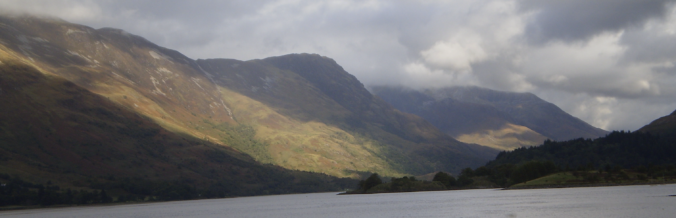
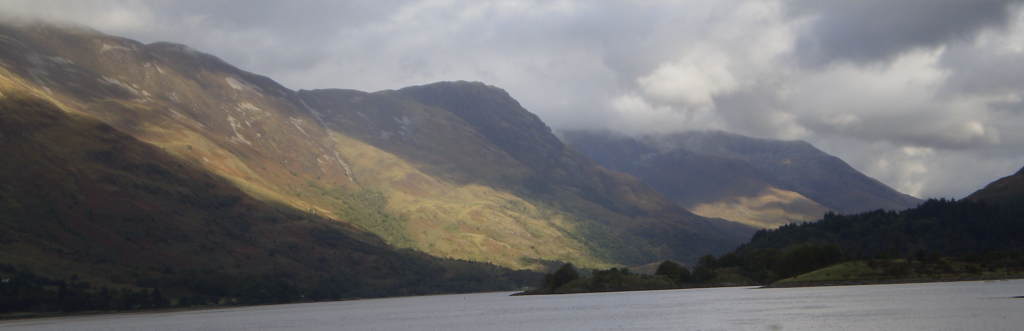
The first was in the Highlands of Scotland as a sixteen-year-old, long before I discovered my faith. It was the cliché of being at one with nature, while also feeling utterly insignificant against the vast mountains. To realise that these magnificent peaks that dwarfed me, were only a tiny part of this planet — and that this planet itself was just a speck in the solar system, which in turn is insignificant compared with the vastness of the universe — was overwhelming. I didn’t recognise it as a spiritual moment at the time, but subsequent return trips have helped me understand just how formative it was, and how much that feeling went on to influence my thinking in later years.

Another deeply spiritual moment happened more recently on a trip to the Holy Lands. This was a profoundly religious experience, more in keeping with what some might consider a conventional understanding of spirituality.

The most recent was a trip to Uluru in the centre of Australia. It couldn’t be more removed from my cultural or religious background, but like the experience in Scotland, it was real and powerful. Again, I struggle to describe it without resorting to clichés, but there was a connection — not to any specific piece of soil, as I have no traditional claim to this land beyond my Australian citizenship. No, this connection was again to the earth itself, and to the cosmos.

I have no doubt that spirituality is real. It has substance and power, and those who dismiss it — or who have never experienced it — are missing out. The question for me is how to use it, or even how to make sense of it.

For millennia, human beings have tried to understand this through philosophy and religion, and I have no issue with that. Parables, stories, and theologies are all we really have to help us make sense of it, and our different cultures interpret these ideas in their own ways. Yet time and again, they seem to arrive at similar conclusions.

And then there are the scientists. What would we do without them? Many of the greatest philosophers and theologians leaned heavily on science, and science has done extraordinary things. It has helped us understand the how, but not the why. And for me, the why is the far bigger and more interesting question.

If science is used to harness what is, and to ask how? then it fulfils its purpose. But if it exists to prove that humankind is master of its own destiny, then I fear for our future.

Somehow, though, amid the chaos and the order of the cosmos, we also seem — time and again — to bring ourselves back from the brink.

So, is being spiritual the same as being religious? It doesn’t have to be, I think is more about connection than anything else.

Tottenham Hotspurs at War

What a mess.

Not that long ago we were looking up the table, wondering if we could sneak into the European places. Now we’re glancing over our shoulder to see what West Ham are doing. That’s never a healthy sign.

And next up? Arsenal. Perfect timing.

I don’t mind losing to a better side as long as its not Arsenal. What I mind is not really knowing what we are anymore. One week it’s a project, next week it’s a rebuild, then it’s transition. After a while it starts sounding like excuses.

Maybe we need some diversionary chaos tactics. Pull something straight out of the Donald Trump handbook. Change the narrative. Redefine success. Tell everyone mid-table was the plan all along.

“Relegation scrap? No, no. Strategic recalibration.”

The trouble is, unlike Trump voters, football fans aren’t stupid. We can see what’s in front of us, confidence is non existent, and Woolwich won’t be feeling charitable.

Still, this is football. It makes no sense half the time. We’ll probably turn up, put in a performance when nobody expects it, and drag us all back in again.

And if we don’t?

I’ll be back next week, checking West Ham’s result.

Again.

Was There Ever a Time We Didn’t Worry?

Lately, I’ve been having conversations with my father about the state of the world. He’s 85 now, and if you ask him, things have never felt quite this bad. The world feels unstable. The health system is under pressure. Nothing seems to work the way it used to. And somewhere in all of that sits a quiet sadness — maybe even a bit of despair — about where we’ve ended up.

He says, “It used to be better.”

But I’m not so sure.

My dad was born during the Second World War. Not long after that came rationing in the 1950s — years when food and basic necessities were still tightly controlled. The 1960s brought the Cuban Missile Crisis, when people genuinely believed nuclear war could break out at any moment. The 1970s gave us oil shocks, rolling blackouts, strikes, inflation, and the three-day week. The 1980s? Let’s not pretend Thatcher and Reagan were universally calming influences, and that’s before you even factor in the Cold War or the AIDS crisis.

At no point in that timeline does the phrase “a peaceful, worry-free world” really fit.

So where does this idea come from — that there was once a golden age when things were simpler, calmer, and somehow better?

I think part of it is memory. We don’t remember the world as it was; we remember ourselves in it. When you’re young, healthy, working, raising a family, and full of purpose, the future feels open — even if the headlines are grim. The worries are there, but they sit in the background. With age, that balance flips. The world feels louder, faster, and less forgiving, while your own ability to adapt quietly shrinks.

Another part is how we consume news now. Once upon a time, bad news arrived once a day — maybe in the evening paper or on the nightly bulletin. Now it’s relentless. Twenty-four-hour news cycles. Social media. Algorithms that reward outrage and fear. We’re not just informed anymore; we’re immersed. The world hasn’t suddenly become more dangerous — we’re just never allowed to stop staring at its problems.

And to be fair, some things really have changed. Institutions that once felt solid now feel fragile. Health services are stretched. Trust in leadership feels thinner. These aren’t imagined concerns. But they’re also not unique to this moment in history — every generation has watched its systems wobble and wondered if this was the beginning of the end.

The truth is, every era feels like a crisis while you’re living in it. History only looks orderly in hindsight.

Maybe the most honest way to put it is this: there was never a time when the world didn’t need worrying about. There were just times when we had more energy, more optimism, and fewer aches reminding us of our own limits.

I don’t think my father is wrong for feeling the way he does. After 85 years of constant change, conflict, and uncertainty, it would be strange not to feel worn down by it all. Sometimes what sounds like pessimism is really just fatigue — the tiredness that comes from having seen too much, lost too much, and still being expected to keep up.

When he says the world used to be better, I don’t argue anymore. I just listen. Because maybe what he really means is that he felt better then — and that’s something no headline, statistic, or historical comparison can ever quite disprove.

And maybe that’s the lesson in all of it: the world has always been a bit of a mess. We just carry it differently as the years pile up.

No Point Stressing

Six weeks into retirement, and what do I think of it so far? Well… as usual, things haven’t gone exactly to plan. But there’s no real point in stressing about that. Stress won’t improve anything, and it has a habit of making things worse if you let it.

Debbie is doing well, and that’s the main thing. What’s become clear, though, is that nothing can be rushed. Because of that, my transition into retirement hasn’t looked quite the way I imagined it might. That said, not being at work has meant I’ve been able to be around, to help where I can, and to simply be present. In many ways, that’s been a blessing.

The support from family has been incredible. It’s moments like this that remind you that we did a pretty good job raising our sons. They and their families have stepped up without hesitation, offering practicle help and kindness whenever it’s been needed. That’s something you don’t take lightly.

So for now, I’ll reserve judgement on retirement itself. There’s no rush to label it. We’ll sit tight, stay patient, and let things unfold in their own time.

The real question is this: somewhere between making endless cups of tea and doing the washing, I’m not sure what’s more depressing — watching Trump’s latest antics on YouTube, or watching everyone else out there happily doing their own big lap.

Christmas Eve

The excitement in the air is palpable. What a privilege it is to spend Christmas with grandchildren—a second chance to relive all those special Christmases with your own children.

At the same time, it’s right to reflect on family we cannot be with due to distance, and those who made our own childhood Christmases so special but are no longer with us. It feels like the perfect moment to wish you and yours a peaceful Christmas and an extraordinary New Year.

God bless you.

Valiant Effort Boys

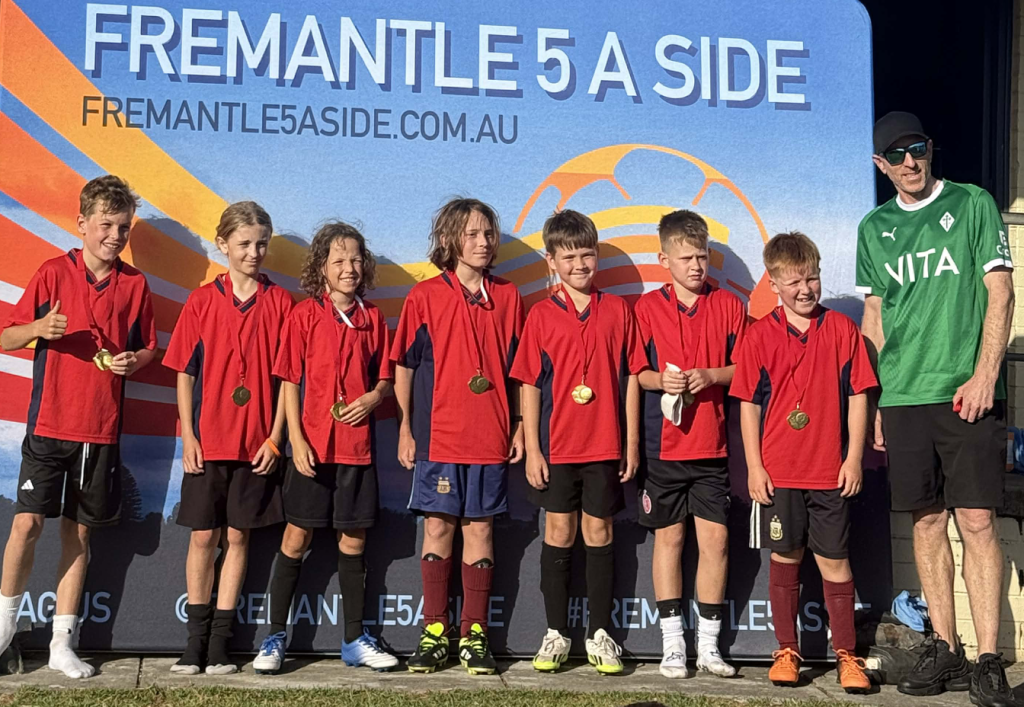
What a great effort lads, runners up for both of your first two seasons. 

My grandson Lincoln (fifth from the left) received his runners-up medal for the second year in a row. I wasn’t there to see the final itself, but I did make it to the semi-final — a tense family showdown where Lincoln’s team faced off against his cousin Alex’s team. It was one of those odd sporting occasions where the grandparents were cheering for both the winners and the losers at the very same time. Proud of them all. 💛

« Older posts

© 2026 Wayne's World

Theme by Anders NorenUp ↑