I think most of us can have spiritual experiences if we think deeply enough about the world. For some, just getting through the day is enough to fully occupy the mind — survival can leave little room for reflection (if only they knew the peace that was available). Others are so wrapped up in themselves and their goals that there is no space for anything else. But most of us, I suspect, sometimes stop, look up, and say to ourselves: I am just a tiny part of something much bigger.
It is at this point that we acknowledge that the universe we are part of is well beyond our comprehension. Much of it is chaos, but there is order too. Whether it all came about by accident or there was a creator who brought it into existence feels irrelevant to me when it comes to spirituality.
I happen to be a Christian, but only one of my three most spiritual moments had anything to do with my Christian belief.
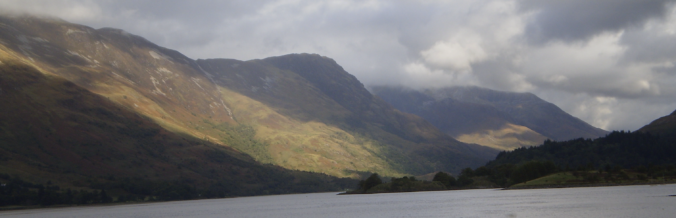
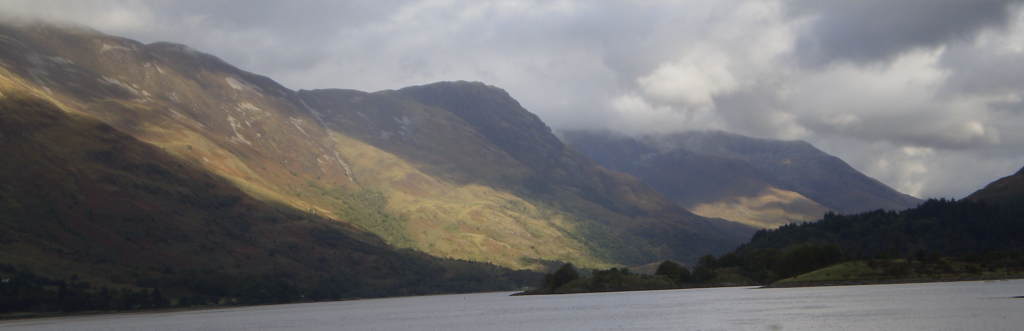
The first was in the Highlands of Scotland as a sixteen-year-old, long before I discovered my faith. It was the cliché of being at one with nature, while also feeling utterly insignificant against the vast mountains. To realise that these magnificent peaks that dwarfed me, were only a tiny part of this planet — and that this planet itself was just a speck in the solar system, which in turn is insignificant compared with the vastness of the universe — was overwhelming. I didn’t recognise it as a spiritual moment at the time, but subsequent return trips have helped me understand just how formative it was, and how much that feeling went on to influence my thinking in later years.
Another deeply spiritual moment happened more recently on a trip to the Holy Lands. This was a profoundly religious experience, more in keeping with what some might consider a conventional understanding of spirituality.
The most recent was a trip to Uluru in the centre of Australia. It couldn’t be more removed from my cultural or religious background, but like the experience in Scotland, it was real and powerful. Again, I struggle to describe it without resorting to clichés, but there was a connection — not to any specific piece of soil, as I have no traditional claim to this land beyond my Australian citizenship. No, this connection was again to the earth itself, and to the cosmos.
I have no doubt that spirituality is real. It has substance and power, and those who dismiss it — or who have never experienced it — are missing out. The question for me is how to use it, or even how to make sense of it.
For millennia, human beings have tried to understand this through philosophy and religion, and I have no issue with that. Parables, stories, and theologies are all we really have to help us make sense of it, and our different cultures interpret these ideas in their own ways. Yet time and again, they seem to arrive at similar conclusions.
And then there are the scientists. What would we do without them? Many of the greatest philosophers and theologians leaned heavily on science, and science has done extraordinary things. It has helped us understand the how, but not the why. And for me, the why is the far bigger and more interesting question.
If science is used to harness what is, and to ask how? then it fulfils its purpose. But if it exists to prove that humankind is master of its own destiny, then I fear for our future.
Somehow, though, amid the chaos and the order of the cosmos, we also seem — time and again — to bring ourselves back from the brink.
So, is being spiritual the same as being religious? It doesn’t have to be, I think is more about connection than anything else.
If you agree with what you read, great. If you don’t, that’s fine too. This isn’t advice and it’s not instruction — it’s just one person thinking out loud and sharing the result. Let me know what you think by leaving a comment.
Just Wayne. Just saying.



Leave a Reply